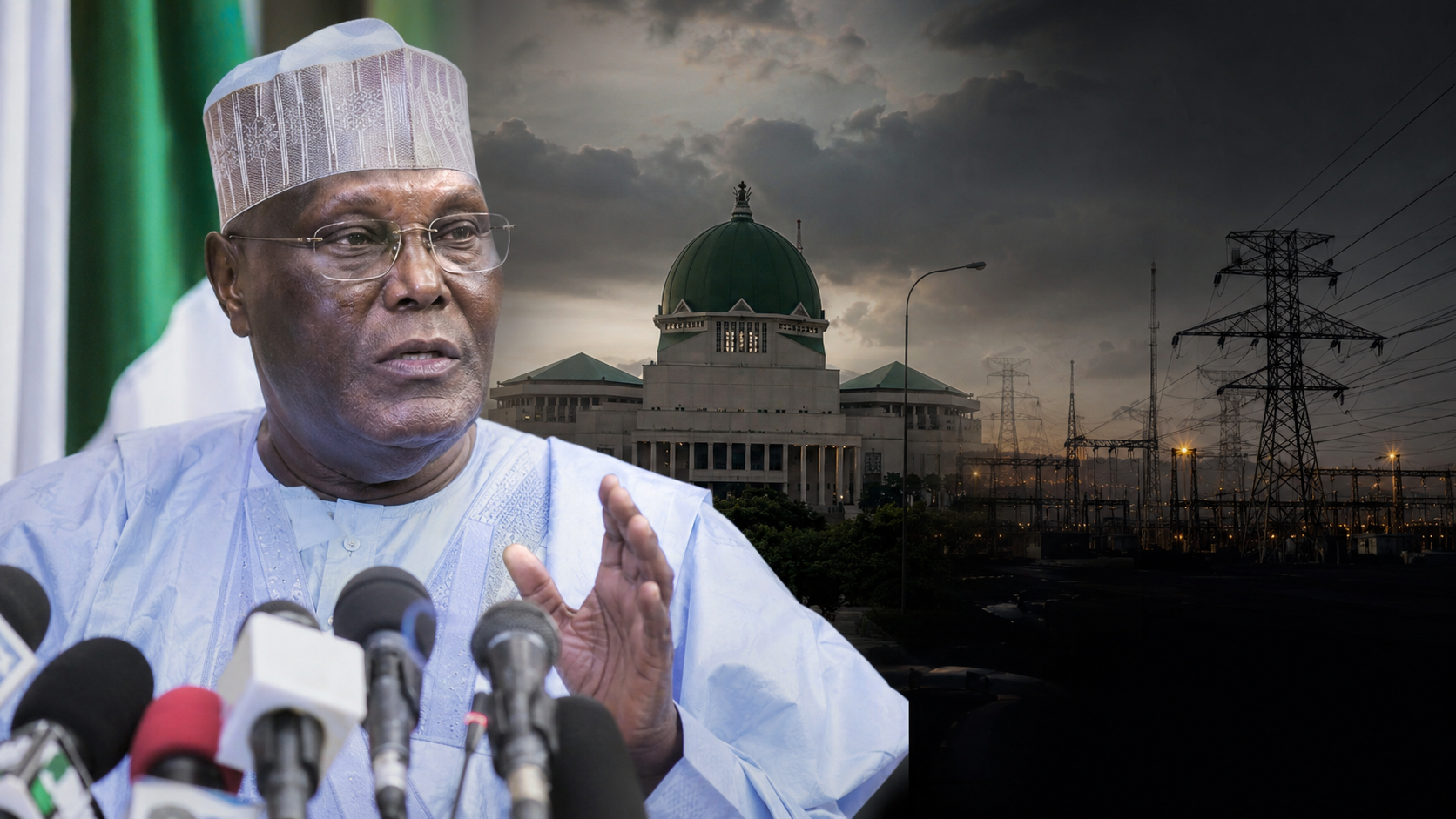
Former Vice President Atiku Abubakar has challenged President Bola Tinubu’s administration to investigate and prosecute him if it has credible evidence linking him to wrongdoing in the long-running controversy over power-sector expenditure under the Olusegun Obasanjo government.
The defiant response has reopened one of Nigeria’s most politically charged questions: how billions of dollars were committed to electricity projects while millions of homes and businesses continued to live with unstable power.
Atiku says allegations should be tested, not recycled
Atiku said the government should invite him, produce its evidence and take the matter to court if it believes an offence was committed. He accused administration supporters of reviving the allegation whenever he raises questions about the use of savings from petrol-subsidy removal.
The dispute intensified after Atiku criticised the government’s economic direction and proposed a different approach to subsidy policy. The Presidency responded by attacking his record and economic arguments, pushing the political exchange back toward decisions made between 1999 and 2007.
What the $16 billion figure means
The frequently repeated $16 billion figure has been disputed for years. It has been used broadly in political debate to describe power-sector spending and commitments during the Obasanjo era, but different investigations and official accounts have classified the expenditure in different ways.
Atiku’s challenge does not by itself resolve the underlying question, nor does repetition of the allegation establish criminal liability. A credible investigation would need to identify specific projects, contracts, disbursements, beneficiaries, completed work and the legal responsibility of each official involved.
Nigerians are still paying for unreliable electricity
The argument carries emotional weight because the failure is not historical to ordinary Nigerians. Families still buy fuel for generators, small businesses lose income during outages, and manufacturers pass high energy costs to consumers.
That is why another cycle of accusations without evidence will satisfy few people. Nigerians deserve a transparent public account of what was spent, what was delivered, which projects failed and whether anyone unlawfully benefited.
2027 politics enters the controversy
With the 2027 election approaching, the dispute is likely to become even more partisan. Atiku’s critics will continue to scrutinise his eight years as vice president, while the opposition will demand an account of current subsidy savings, public borrowing and infrastructure performance.
The public interest lies beyond the political theatre. If the government has evidence, it should pursue a lawful investigation. If it does not, the allegation should not be used as a substitute for answering present-day economic questions.
Sources: Daily Trust; Voice of America archive.