
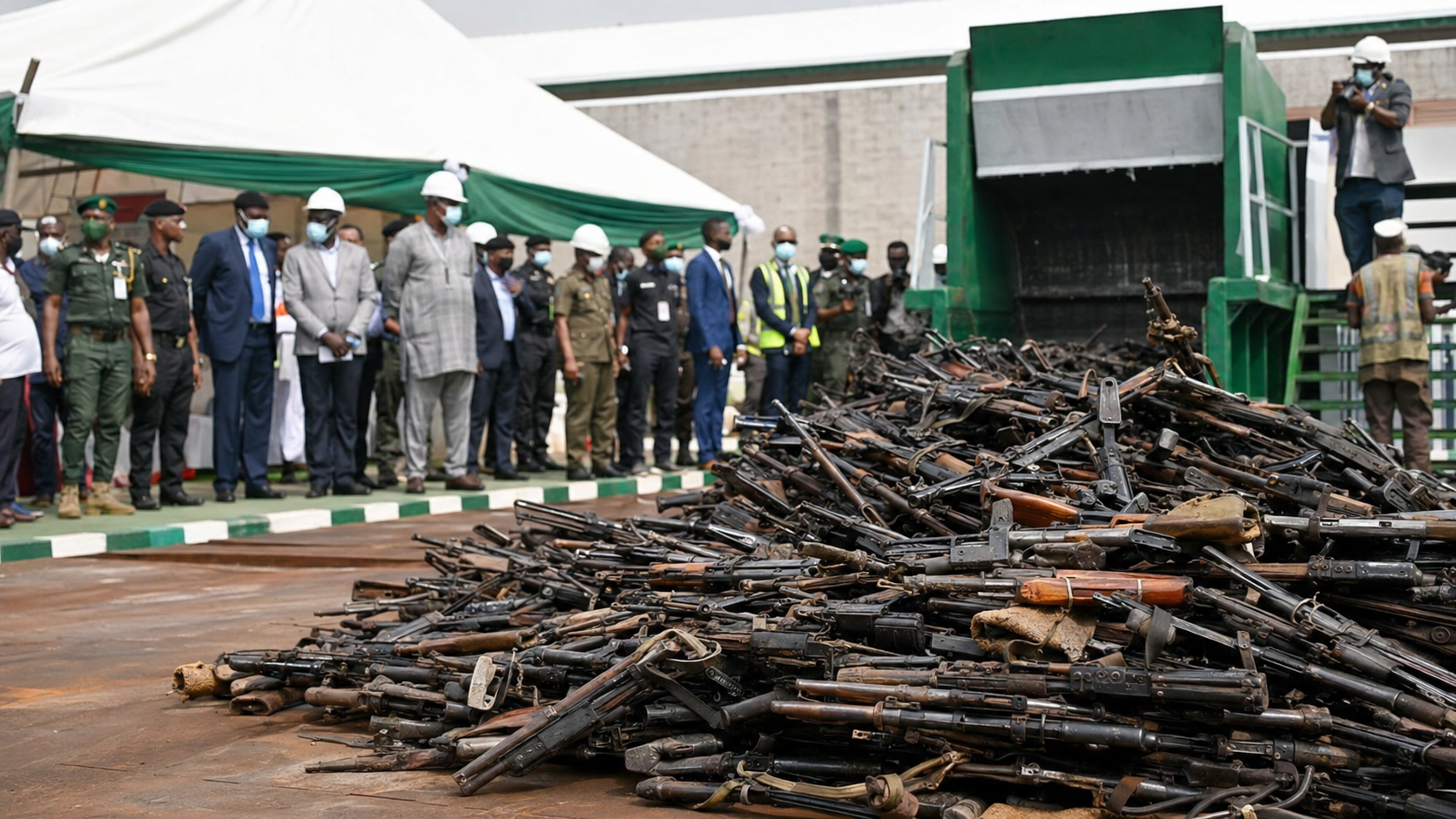
Nigeria's national arms-control agency has destroyed 2,819 illicit, obsolete and decommissioned firearms as part of efforts to reduce the circulation of weapons linked to insecurity.
The destruction was announced on July 30 and involved weapons that had been seized, surrendered or formally removed from service. Officials said the exercise was intended to prevent the firearms from returning to criminal networks or unauthorized use.
Illegal arms remain a national security challenge
The spread of small arms has intensified the impact of kidnapping, banditry, communal conflict and organized crime across parts of Nigeria. Destroying recovered weapons is one part of arms control, but it does not by itself stop trafficking routes or identify the networks supplying armed groups.
Effective control requires accurate record-keeping, secure armouries, stronger border enforcement, intelligence sharing and criminal investigations that trace weapons from source to end user. Public reporting is also important so citizens can verify how seized arms are stored and disposed of.
Why verified destruction matters
Weapons that are poorly secured after seizure can be stolen, resold or diverted. A documented destruction process reduces that risk and signals that recovered firearms will not quietly re-enter circulation.
The government will still need to demonstrate measurable progress beyond a single disposal exercise. Useful indicators include the number of trafficking networks disrupted, successful prosecutions, weapons traced to their sources and reductions in armed violence in affected communities.
Nigeria's security challenge is complex and cannot be solved through firearms control alone. However, reducing the supply of illegal weapons is a necessary part of a broader strategy that includes policing reform, justice, local conflict prevention and protection of vulnerable communities.
Source: Reuters, July 30, 2026.