
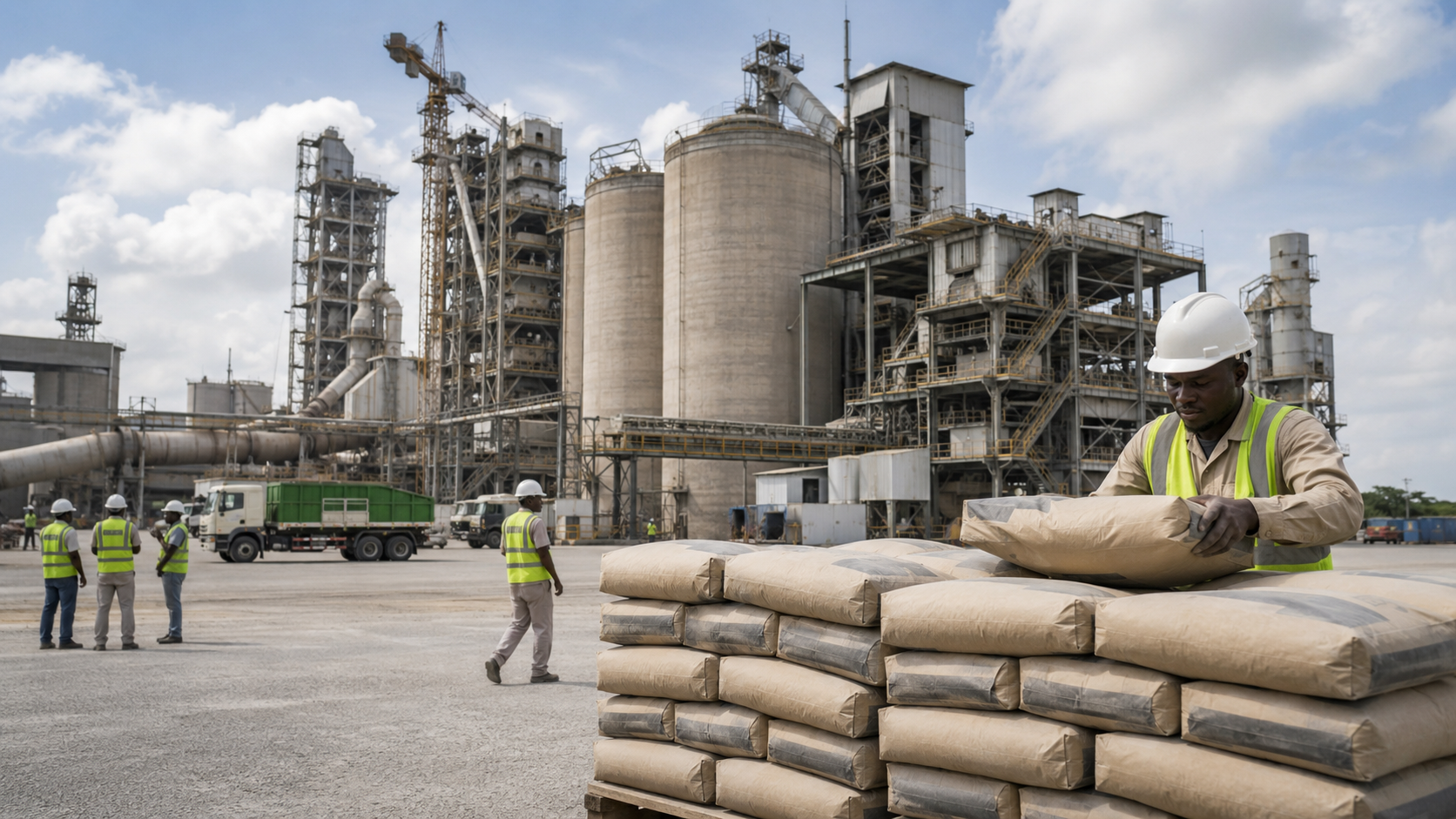
Dangote Cement recorded group revenue of approximately ₦2.51 trillion in the first half of 2026, up 21.4 percent from about ₦2.07 trillion in the corresponding period of 2025.
The increase was supported by strong demand in Nigeria and improved operating performance across the company’s other African markets. The result confirms that one of the continent’s largest cement producers continued to grow sales despite high financing, transport and energy costs.
Why the result matters
Cement demand is closely connected to construction, housing and infrastructure activity. Rising revenue can therefore point to continued project spending, although higher sales values do not automatically mean that building materials have become more affordable for consumers.
For Nigerian households and property developers, cement prices remain a major factor in the cost of housing. Government infrastructure programmes, private construction and exchange-rate movements can all influence demand and production costs.
Growth across African operations
Dangote Cement’s pan-African footprint gives the company access to multiple markets but also exposes it to different currencies, regulatory systems and logistics challenges. Stronger performance across those businesses can reduce dependence on a single national market.
Investors will look beyond revenue to margins, cash flow, debt costs, production volumes and the company’s ability to manage fuel and distribution expenses. Environmental performance will also remain important as governments and financiers push heavy industry to reduce emissions.
The H1 figures show commercial momentum, but the wider economic test is whether expanded production and operational efficiency can support more stable supply and help moderate construction costs.
Sources: Dangote Cement H1 2026 interim report and International Cement Review, July 30, 2026.