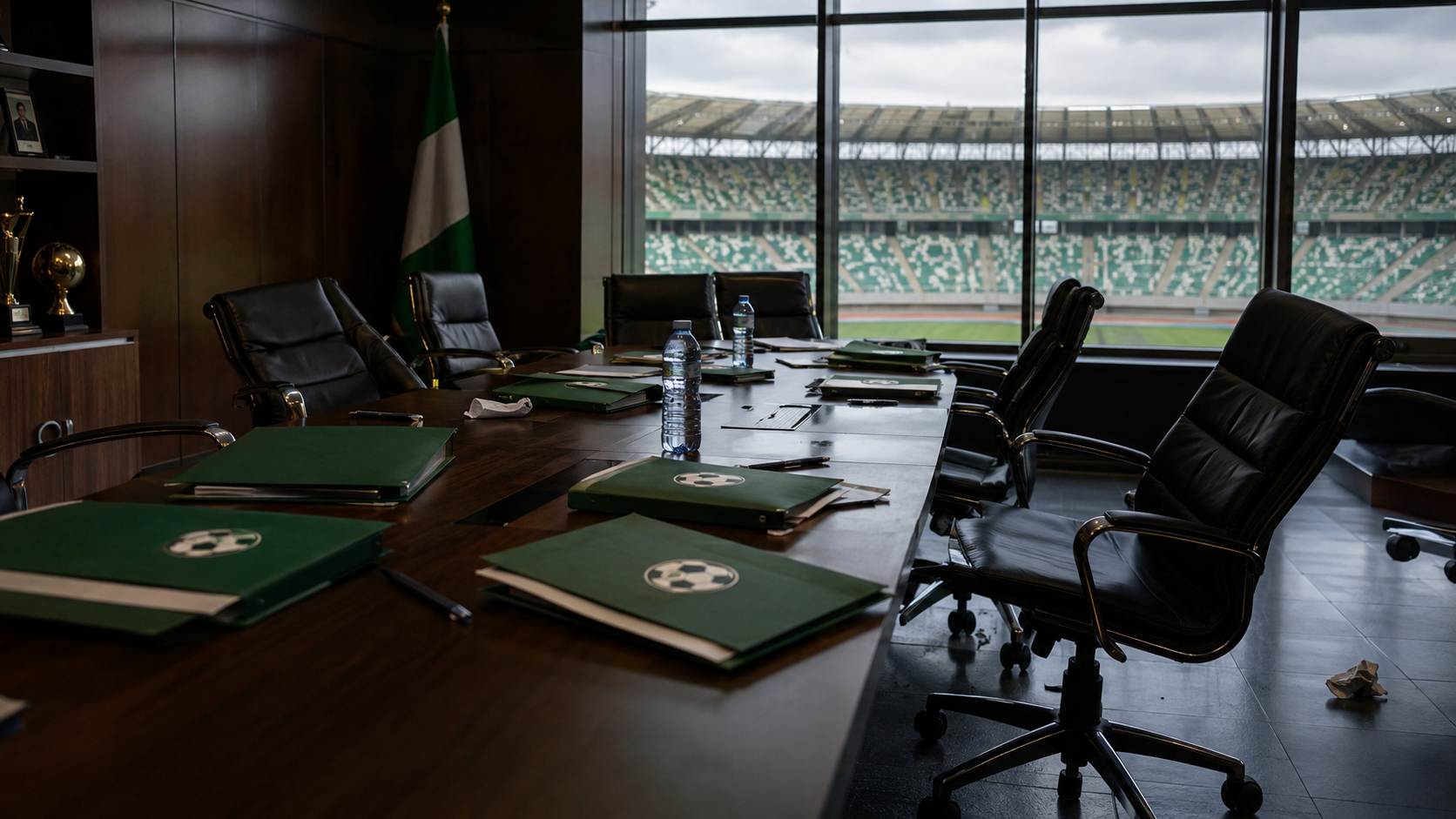
Nigerian football has been thrown into fresh uncertainty following reports that Nigeria Football Federation President Ibrahim Gusau and several members of the executive committee have resigned amid mounting pressure over the performance and management of the country’s national teams.
The reported departures, involving more than half of the 13-member board according to some accounts, could destabilise the federation ahead of its planned election and deepen an institutional crisis that frustrated supporters believe has lasted far too long.
Resignation reports remain developing
Multiple Nigerian outlets reported that Gusau and other board members had stepped down. However, the NFF had not published a complete official list of resignations at the time of writing, and Gusau was expected to address the media over the claims and the election dispute.
For that reason, the number and legal effect of the reported resignations should be treated as developing facts rather than a completed leadership transition.
Years of disappointment fuel public anger
The pressure did not emerge overnight. Nigerian supporters have watched national teams struggle with inconsistent preparation, administrative disputes and painful qualification failures.
The Super Eagles’ failure to qualify for successive FIFA World Cups has intensified criticism, while Nigeria’s reported failure to reach the 2027 Women’s World Cup added to anger over the direction of a women’s programme that once dominated the continent.
For millions of Nigerians at home and abroad, football is one of the few national institutions capable of briefly dissolving ethnic, religious and political divisions. When that institution repeatedly disappoints, the hurt extends beyond the score line.
Questions over governance and money
Critics have demanded greater transparency in sponsorship, tournament spending, coach appointments and federation decision-making. Separate reports have linked the leadership crisis to allegations of financial mismanagement, although those allegations require formal investigation and should not be treated as proven.
Any transition must therefore go beyond replacing names. Nigerian football needs audited accounts, a credible election process, clear development targets and a structure that protects coaches and players from administrative instability.
What happens next?
If enough executive members have formally resigned, questions will arise over whether the board still has the quorum and authority to conduct business or supervise the planned election. Football authorities may also need to clarify the applicable statutes and any role for FIFA or the Confederation of African Football.
Supporters will be watching for an official statement, verified resignation letters and a lawful transition plan. The country cannot afford another leadership struggle that leaves players and competitions trapped in uncertainty.
Sources: The Guardian Nigeria; The Nation.